when promises and dreams crashed into reality
TL;DR: Tried tons of cyberdecks. Built my own. Burned a lot of cash. Turns out the whole market's just a money trap — not built to actually do what a cyberdeck is supposed to. The cyberdeck community has exploded in recent years, but the commercial reality is deeply disappointing.
The cyberdeck concept itself appeared quite some time ago. In fact, long before laptops — the concept was introduced by William Gibson in his short story "Burning Chrome" in 1981, when the first "portable" computers weighed 11 kilograms and cost as much as a car, and then there were mentions in "Neuromancer" and so forth. 
Then came the laptop era and everyone conveniently forgot about cyberdecks, until the moment when it became clear that laptops are still somewhat different.
the resurgence and the reality gap
What's fascinating is how the cyberdeck concept has experienced a massive revival in the 2020s. Just a few short years ago, we were looking at plywood decks held together with hot glue. Today, we've got custom computers that don't just look like they could be Hollywood props, but manage to provide real-world functionality above and beyond the traditional consumer computer paradigm.
The community has exploded across platforms like Hackaday, Reddit's r/cyberDeck, and The Cyberdeck Cafe. The community has moved well past the "how" stage, and is now deep into the "why" — yet somehow the commercial market has completely failed to capitalize on this enthusiasm in any meaningful way.
what is a cyberdeck
Generally, there's no universal definition, just like with computers. Simply because this is primarily an author's fantasy that came to life in a completely different form of portable devices, and the community had to remake its definition to fit the new reality.
However, everyone agrees that it's something like a laptop, only somewhat different, but how different?
core principles of a cyberdeck that distinguish it from a laptop
- It's noticeably smaller
- It should "look cooler" - cyberpunk style
- It's an extremely hackable device (I'll explain later)
- It's either a super multitool OR, conversely, serves only one specific purpose
- And... lately there's been a trend toward it being DIY
the theoretical framework vs. practical reality
A standard cyberdeck is about the size of a paperback book, is made of plastic and weighs about half a kilogram. It features six (6) interface ports for adding additional options, and (6) output ports for "jacking in" other people — this is from the canonical Cyberpunk RPG sources. In reality, modern cyberdecks are closer to tiny laptops with quirky form factors.
The disconnect between Gibson's vision and today's implementations is telling. Gibson imagined devices that were purpose-built for interfacing with cyberspace — specialized tools for a specific task. Today's cyberdecks are mostly general-purpose computers that happen to look cyberpunk-ish.
BUT
It's quite difficult to specifically describe what exactly distinguishes a cyberdeck from a laptop these days, aside from size itself. And here, it would seem, there should be room for authors' imagination, but imagination, as it turned out, was limited only to appearance and power castration. Well... harsh truth, damn it!
A common criticism we hear of cyberdecks is that functionality too often takes a backseat to aesthetics — in other words, they might look awesome, but they aren't the kind of thing you're likely to use a daily driver. This perfectly encapsulates the fundamental problem plaguing the entire scene.
Let's talk about what the cyberdeck market currently represents, analyze the downsides, and at the end discuss how this should ideally look, naturally in my humble opinion (which is correct btw)
harsh Reality
There are three types of cyberdecks:
- Made with duct tape and prayers, following guides from the internet, where the base is usually RPi, Orange Pi, etc
- Made from old laptop parts, like this guy coolly implemented here
- Bought from damn capitalists
the diy explosion and its problems
The DIY cyberdeck scene has absolutely exploded. Given the supercomputers in our pockets, it's really a wonder we don't see more android-based cyberdecks, but most seem to stick to SBCs. Lately it seems the slabtop form-factor has been equally popular for cyberdecks, but it's hard to beat a clamshell for practicality.
But it is for many rather good reason most cyberdecks are Pi Based -They are well supported hardware with an almost certain drop in upgrade path on top of long term availability like for like. They are small, powerful and relatively power efficient — yet this technical soundness doesn't translate to practical usability for most builders.
guides
Most of the time, these are completely useless things that can simply be replaced with a fully functional store-bought equivalent. Why spend two months waiting for all that junk from China, printing custom cases, making what is usually an objectively bad-looking and unusable gadget that will fall apart after the first time you carry it in a backpack?
Bruh, it's actually cool when you're a high school or college student and this is your pet project to figure out some technologies, soldering, electrical engineering, or just have fun in your free time.
But it's not usable! I've seen literally two examples where people managed to create a device that you can actually use properly for its intended purpose.
notable exceptions in the diy space
However, there are some standout examples that prove the concept can work. [Nicholas LaBonte] shows off a Cyberdeck Handheld that demonstrates just how good something can look when care and attention goes into the design and fabrication. He wanted to make something that blended cyberpunk and nautical aesthetics with a compact and elegant design, and we think he absolutely succeeded.
Another impressive build is the vecdec, built by [svenscore] is a perfect example. We actually came across this one in the Desert of the Real, also known as the outskirts of Philadelphia, while we stalked the chillout room at JawnCon 0x1. When everyone else in the room is using a gleaming MacBook or a beat-up ThinkPad, its wildly unconventional design certainly grabs your attention.
These represent the 1% of DIY builds that actually work as intended. The other 99% are aesthetic exercises that sacrifice functionality for looks.
old parts
Recycling, reuse, green planet. The other reasons here are from the first point. It's basically a pet project. Which is even harder to make not ugly, there are no guides, figure it out yourself.
Capitalist Solutions
Ooh, and now to my favorite part - what does the market offer us? Probably so many interesting things humanity has created during the peak of technology? Yeah, right.
| Feature | | ClockWork | Beep&Hack BerryPi | Pilet |
|---|---|---|---|
| Price- | $180-600 | ~$100 | ~$200 |
| Status- | Beloved | Beloved | Beloved |
| Audience- | TechGuys mostly | so-called hackers | idk |
| Specs- | version-dependent | old shit | version-dependent |
| Quality- | godlike | shit | plastic shit |
the commercial cyberdeck wasteland
As you can see from the table, there aren't that many commercial cyberdecks (or cyberdeck-like devices) on the market. At least ClockWork with their uConsole and Pilet clearly position themselves as such.
The market reality is even bleaker than my table suggests. According to recent analysis, the cyberdeck scene is dominated by individual makers and tiny companies rather than established manufacturers. Check out our cyberdeck selection for the very best in unique or custom, handmade pieces — this Etsy-based ecosystem tells you everything about the commercial viability.
I won't be reviewing Raspberry and its clone - Orange, since they have basically a billion possibilities. It just so happens that they often serve as the base for DIY cyberdecks, so they deservedly made it into the table.
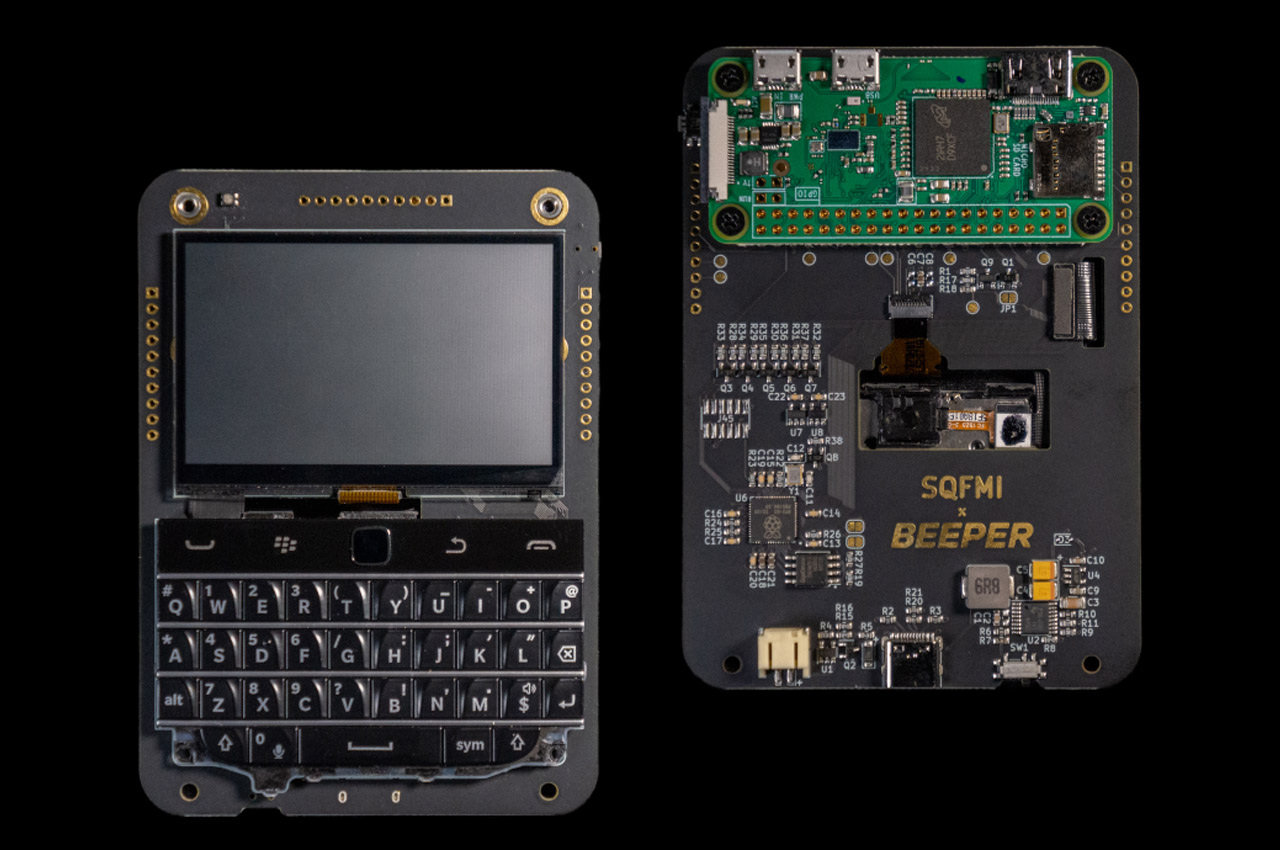
And I won't mention BeepBerry and HackBerry either because their base is clear from the names. You can read about them via the links. They're just Pi with a screen and a BlackBerry-style keyboard. Cool, but only really usable for ssh or weechat and such.
emerging alternatives: the hackberry ecosystem
There's actually a more robust ecosystem around these BlackBerry-style devices than I initially gave credit for. The HackberryPi from ZitaoTech has gained significant traction, with users reporting "Everything is fine with my unit after playing with it for around a month now. Great design, great 3D print quality of the case, no problems at all."
These represent a different approach — instead of trying to replicate laptop functionality, they embrace the limited form factor and focus on specific use cases like terminal access and lightweight computing.
clockwork
Actually, the guys are developing various devices. It's just that the uConsole is one of the most talked-about and I became its happy owner. Without irony, I am happy, though not very much - we'll figure out why.
But first, I won't spend half the article quoting information from their website - go and read it yourself or check out the video from sn0ren. They have many different versions, including ARM architectural solutions and ones made for the CM-RPi module, which is what I got. By the way, unlike Beep-HackBerry, I'm telling you about this one only because they at least have the option to build on a non-Raspberry base and it doesn't look like plastic crap.

the clockwork pi reality check
It really looks cool, doesn't it? Because it is! This is an incredibly high-quality, fully metal work of art.
- Easy to assemble - only one type of screws and one hex key that looks like Gordon Freeman's crowbar
- Feels amazing as hell
- Looks amazing as hell
But, every rose has its thorn :( When the euphoria wears off, reality sets in.
But how... how do you...
the repairability nightmare
Yeah, dude. If any of your parts break, that's it. You can order a brand new, ridiculously expensive uConsole. Nothing is sold separately.
Yes, they released the blueprints and, in theory, I could go to a factory and order a hundred of these rubber keyboards, but seriously? There are zero listings online selling anything separately. Not even the damn screws - thank god there's one spare in the kit.
This fundamental design flaw is widespread in the commercial cyberdeck space. Order #19531 here (CM4 without the 4G module). Finally received my long awaited toy today, but it quickly left me with some disappoinment and questions… The case comes with slight defect out of the box. Quality control issues are rampant, but repair options are nonexistent.
The only quickly replaceable parts are the screen, since it's not exclusive to the uConsole, and the CM-RPi module itself.
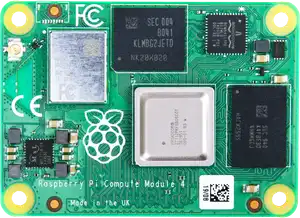
All the internal hardware is unique, and so is the external stuff. So what am I supposed to do with this? Carry it in titanium case? Guys, I already waited 3 months for this thing, ordered it from some Chinese reseller at triple the price, and then this asshole sent me the wrong color, and you know what? I can't order the front plate separately either. The seller told me "just paint it, friend" and refunded me 15 bucks. Thanks, the Party is pleased with you, +1000 social credit points!
systematic delivery and support problems
Clockwork produce the uConsole on demand, meaning that they make and ship the units in small batches. As a result, delivery of the uConsole can take at least 90 days, but I have heard reports of it taking nearly a year from purchase to delivery. This isn't just inconvenience — it's a business model problem that affects the entire cyberdeck ecosystem.
now about the user experience
Extremely hackable, you say? My fucking computer is extremely hackable, but your uConsole is a bitch to flash! Want to install Raspberry Pi OS based on Debian? No problem, takes 3 minutes. Arch? Ooh... NixOS? Oooooh...
Yeah, in theory, you can. It really is extremely hackable. Except the word "extremely" here refers to the context of time you'll spend customizing the bootloader, system, X11 and other stuff, just so your screen isn't upside down. Or so it displays anything at all.
the software support reality
Unfortunately, it's not just a case of writing whatever system you feel like as the device needs specific keyboard and display drivers to get working. This means that you either need to download and use the specific files from ClockworkPi, or use an off the shelf product with your own drivers installed and ready to go.
This is the core problem with boutique hardware — you're locked into whatever the manufacturer provides, and there are currently no official images as of May 8, 2025 that work with speakers, screen, keyboard, trackball etc. all at once and without issues.
Yes, on one hand it's cool. But fuck, all the solutions at the moment are literally workarounds. There are currently no official images as of May 8, 2025 that work with speakers, screen, keyboard, trackball etc. all at once and without issues. Over time, maybe this will get sorted out, but if I had known about these gotchas, I wouldn't have gotten this hardware-wise raw product.
power management issues
When I click the power switch once, the system seems to turn off immediately, but in fact it stays on. It's just the screen that's off. After a while, when I try to turn it back on, it doesn't work — these aren't isolated incidents but systematic issues affecting multiple users.
and what do I do with it?
Oh, brother, lots of things. This really is the closest thing in spirit to a cyberdeck! Want to turn it into a HackRF? Sure, though why would you when it's more convenient to just buy one separately. Maybe develop games? Um, what kind, for IBM Commodore?
Anyway, I was stumped. But I still found some justification! I upgraded it from the CM4, which is officially supported, to the still-raw CM5 and it became a bit more powerful, which allowed me to run even three browser tabs. Just kidding, I don't have a browser on there.
actual practical uses
-
It fits in my shorts pocket or fanny pack, which makes it convenient for daily carry.
-
When I go somewhere away from home but want to stay connected, I find a place with wifi, connect to my phone or you can buy
uConsoleversion with 4g module and then remote into my home PC, which lets me work almost like on a computer (I mostly work and communicate in terminal and nvim so I don't need much power). -
It has a really nice keyboard.
-
I listen to music through musikcube or kew when traveling somewhere
-
Play old-school pixel games, watch videos, read.
And all this on a small portable cyberdeck!
You'll object - but there's Termux, there's... you've lost your mind. No, you're the crazy ones. Separation, convenience and comfort! That's what I'm looking for.
For it to be a laptop, just not a laptop
By the way, about hacking. Well... install BlackArch or Kali (if you can), plug in an external wifi card, because integrated don't have monitor mode and like... and LARP as hackers, like TikTok kids.
the pilet situation: ambitious promises, uncertain delivery
P.S. I didn't say anything about Pilet. The uConsole has one advantage - it's quality. Well, Pilet is a blatantly ripped-off clone of the uConsole, just made from shitty plastic.
But let me expand on this because the Pilet story is actually more interesting than my initial dismissal suggested.
The Pilet 7 is a tablet computer with a 7 inch touchscreen display and a modular design that lets you attach a physical keyboard or other add-ons via a slot on the bottom. Powered by a Raspberry Pi 5, the system should support a wide range of GNU/Linux distributions — so it's not just a direct uConsole clone but represents a different approach.
the modular promise
What really makes Pilet interesting, however, is its modular design. While it is already usable using touch gestures, you can also connect a keyboard using the slot at the bottom of the box, which holds the keyboard module in place. In theory, you could also attach a camera, a gamepad, or other peripherals via USB or Bluetooth
This modular approach is actually what cyberdecks should be about — adaptable tools rather than fixed-function devices. But whether SoulsCircuit can actually deliver on this promise remains to be seen.
the vaporware problem
You can't buy a Pilet yet, but the lead developer of the project has been sharing details on Reddit and social media. There's also a demo video on YouTube... At this point the project is still in the relatively early stages — and this perfectly encapsulates the cyberdeck market's fundamental problem.
Most "commercial" cyberdeck projects exist primarily as YouTube videos and Reddit posts. The gap between concept and actual shipping product is enormous, and the cyberdeck community has become accustomed to perpetual "coming soon" promises.
the broader market failure: why cyberdecks remain niche
the economics don't work
The fundamental problem is that cyberdecks occupy an awkward middle ground between hobbyist projects and commercial products. If you ever need a reminder of just what the individual hacker or maker is capable of with today's technology, you only need look at the meteoric rise of the cyberdeck — but individual capability doesn't translate to market viability.
Commercial manufacturers face several insurmountable problems:
- Tiny market size — The intersection of people who want cyberdecks and people willing to pay for them is vanishingly small
- Feature complexity — Every cyberdeck buyer wants different features, making standardization impossible
- Support nightmares — Custom hardware means custom drivers, custom firmware, and custom everything
- Manufacturing costs — Small volumes mean high per-unit costs, pushing prices into boutique territory
the community vs. commercial tension
For all their talk of modular designs and and upgradeability, they've made no attempt to provide the kind of support or to foster any kind of community around their base product platform. The forums were effectively dead at launch, and they can't even be bothered to answer basic questions
This criticism of ClockWork applies broadly to the cyberdeck space. Companies try to commercialize community-driven enthusiasm without understanding what makes the community tick.
why raspberry pi dominates
There's no lack of x86-based SBCs that you could base a cyberdeck around, but they all seem to have one or more of the following issues: much more expensive (especially if you need specs capable of running modern Windows and a license for said Windows) fewer ways to hook up interesting external devices and displays
The Pi's dominance isn't just about price — it's about ecosystem support, community knowledge, and long-term availability. But this creates a ceiling on what cyberdecks can accomplish.
conclusion
I finally found an explanation for this: The market lacks a sub-laptop but over-phone device. Something that would be convenient, reproducible, repairable, powerful enough to at least Google something without the CPU catching fire, and compact, comfortable and durable. Just like the Rotring Pencil.
Specifically a working device. That you can take to the forest, to an oil rig, play with on a plane, hack something.
the missing middle problem
This is exactly the same problem we see in the hi-fi player market — the disappearance of the sensible middle ground. Cyberdecks have bifurcated into:
- DIY projects that look cool but don't work reliably
- Boutique products that work well but cost more than laptops
What's missing is the $200-$400 cyberdeck that just works out of the box, runs standard software, and can be repaired when things break.
Yes, some small laptops fulfill this function, but it's still not quite right. The uConsole came closest of all to the ideal cyberdeck that you can buy, configure for yourself, easily repair, and not worry about it dying from the first drop.
Except, unfortunately, the uConsole can't be repaired yet. And you can't really configure it properly either.
the framework that could save cyberdecks
What the cyberdeck market needs is something like Framework's approach to laptops — modular, repairable, with an ecosystem of interchangeable parts and long-term support. But applied to the pocket-computer form factor.
The whole system is designed to be assembled, disassembled, repaired, or upgraded at home. The all-metal case is held together with screws that can be removed using a 2.5mm hex key. There's no glue or adhesive involved. And the 3D design files are available at Clockwork's GitHub page — ClockWork had the right idea, they just failed on execution and support.
So it turns out the market has scammed us and we'll only see cyberdecks in sci-fi/cyberpunk anime, games and novels? I hope not, and that the market will come to its senses. Or ClockWork themselves will take a step toward the community.
signs of hope
Pseudonymous maker "Keigen7" is starting 2024 with a shiny new cyberdeck, using a custom-designed 3D-printed case to house a Raspberry Pi 4 Model B single-board computer (SBC), an ultrawide display, and a mechanical keyboard — the DIY community continues to push boundaries and prove concepts. And Mecha Comet on Rpi5.
The challenge is bridging the gap between these proof-of-concept builds and actual products people can buy and use. Until someone solves the fundamental economics and support challenges, cyberdecks will remain an enthusiast curiosity rather than a legitimate product category.
And I also didn't specify regarding the so-called cyberdecks, simply because they're not mass-produced and are more inclined toward custom builds, which the seller sells privately. Or they're no longer manufactured, like some mini-laptops that were popular in Japan and made primarily for their market. For example - Panasonic CF-U1.
sending positive vibes